Warehouse cleanup vs dumpster rental depends on the size of the site, the waste, the labor available, and the deadline. Full-service hauling can handle sorting, lifting, loading, and sweeping. A dumpster may work for a planned project when staff can load items safely and follow disposal rules.
Table of Contents
- What Is the Difference Between Warehouse Cleanup and Dumpster Rental?
- Which Option Is More Efficient for a Warehouse Cleanup?
- How Do Warehouse Cleanup Costs Compare With Dumpster Rental?
- What Types of Warehouse Materials Can Each Option Handle?
- Which Choice Is Safer for Employees and Warehouse Operations?
- When Should a Business Choose Warehouse Cleanup Services?
- Warehouse Cleanup vs Dumpster Rental: How Do You Decide?
- Frequently Asked Questions
- Key Takeaways
- Conclusion
What Is the Difference Between Warehouse Cleanup and Dumpster Rental?
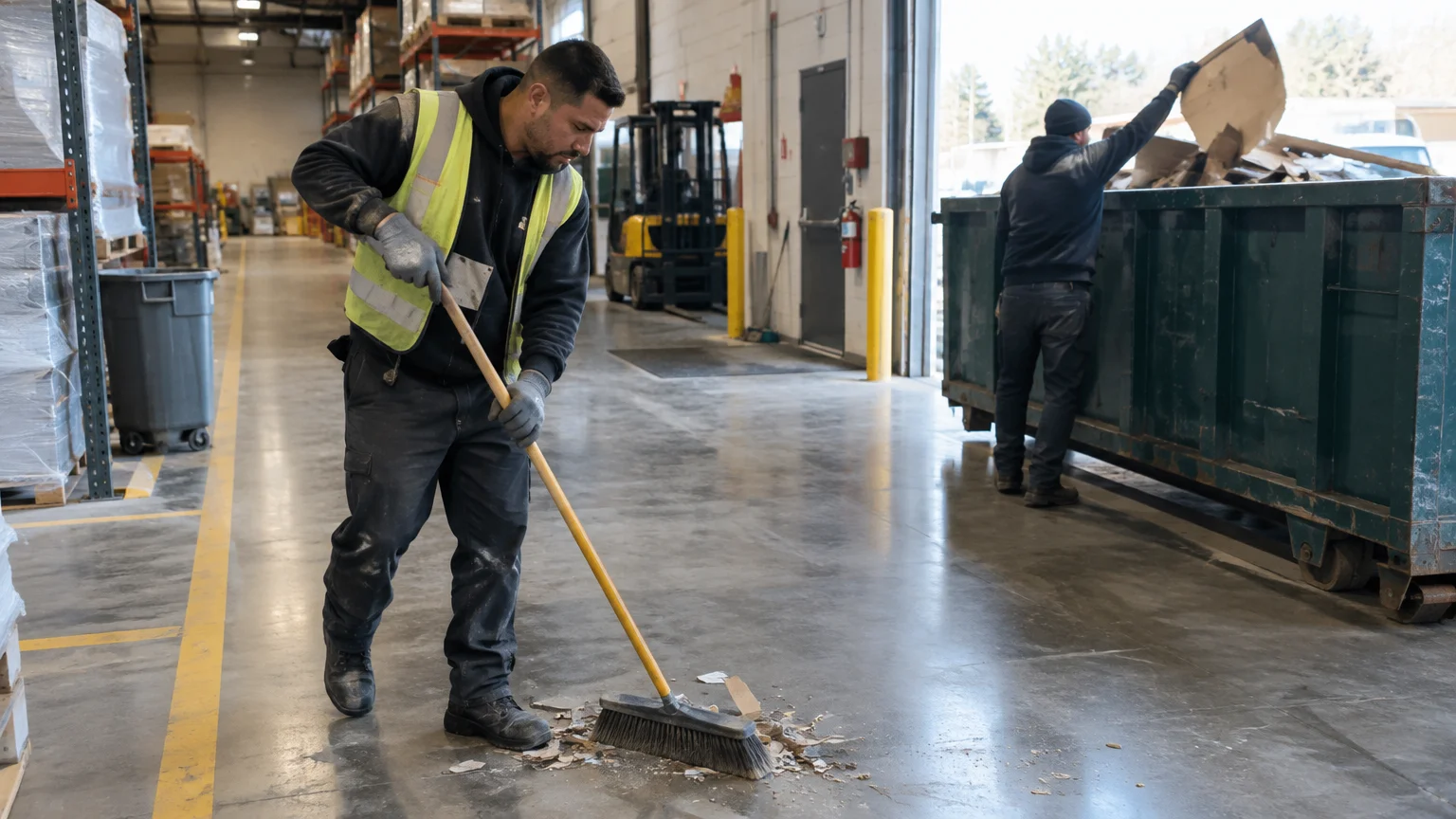
Warehouse cleanup services include the workers needed to remove unwanted items. A crew may sort, lift, carry, load, haul, and sweep the work area. This can help when a warehouse has mixed junk, heavy equipment, old fixtures, and loose debris.
Dumpster rental usually means that a container comes to the property. The business fills it during an agreed rental period. Staff or hired workers must move the waste to the container and keep banned items out of it.
How warehouse cleanup services typically work
A commercial junk removal crew first checks the materials and entry points. The team may find pallets, shelving, office furniture, appliances, boxes, and building debris. Workers then carry items from the warehouse, load them, and take them for disposal or recycling when accepted.
Brentwood CA Junk Removal can help Brentwood property owners review the work before they choose an option. The right plan depends on the building layout, loading space, item weight, and project deadline. Clear details can also help prevent delays on cleanup day.
How dumpster rental works for commercial properties
A dumpster can work well when waste is already gathered near a clear loading area. It may suit a planned renovation or a steady cleanup where employees have time to load it. The business must still plan for container placement, access, weight limits, and local disposal rules.
Which Option Is More Efficient for a Warehouse Cleanup?
Professional hauling is often more efficient when a warehouse has mixed materials or a short deadline. The business does not need to assign employees to carry heavy items, take apart shelving, or make many trips. A crew can focus on removal while the business keeps its normal work moving.
When professional hauling saves time and labor
A full-service crew can handle jobs that a dumpster does not cover. These jobs may include moving items from high storage areas, taking apart large fixtures, and clearing several rooms. This can help during a lease change, property sale, move, or fast warehouse reset.
Professional help can also reduce planning work. A business does not need to form a loading team or find separate help for large items. Commercial Junk Removal may support offices, warehouses, stores, and other business properties in one planned visit.
When a dumpster fits an organized cleanup project
A dumpster may be useful when a business has its own staff and one simple waste stream. It can fit a project where most items are sorted and easy to carry. The site also needs enough room for delivery and safe movement around the container.
The business should think about how long loading will take. A container that stays on site may help with a project done in stages. It may work less well when the warehouse must reopen soon or when employees cannot spare work hours for hauling.
How Do Warehouse Cleanup Costs Compare With Dumpster Rental?
Costs vary because each warehouse has different materials, access needs, labor demands, and disposal rules. Professional warehouse cleanup often depends on the amount and type of material removed. It also depends on the work needed to load it.
Dumpster rental pricing may depend on container size, rental time, delivery, pickup, and disposal terms. The business should compare the full work plan. Looking only at the container can leave out the cost of staff time and loading work.
What affects the cost of professional warehouse cleanup
A crew may review the total volume, weight, item type, stairs, distance from the truck, and loading conditions. Dense items can take more work than light cardboard or boxes. Shelving, machinery, appliances, and building debris may also need different removal plans.
Businesses should explain the job clearly when requesting service. Photos, access notes, loading dock details, and a list of large items can help the provider understand the work. The actual price depends on the job and is confirmed when the business gets in touch.
What affects dumpster rental pricing
Dumpster pricing can change with container size, rental length, local rules, and material type. Extra charges may apply under the rental agreement for excess weight, banned items, or added days. The business should read the terms before placing a container on site.
A low container price may not show the full labor cost. Employees still need time to carry, load, sort, and clean the area. A business should compare the full project workload instead of looking at the container alone.
What Types of Warehouse Materials Can Each Option Handle?
Both choices can handle common warehouse waste, but acceptance rules differ. Pallets, cardboard, broken shelving, fixtures, and loose debris may be accepted when prepared correctly. Businesses should confirm special items before work begins.
Pallets, shelving, equipment, and bulk debris
A professional crew may remove wooden pallets, metal racks, display fixtures, desks, chairs, and old equipment. Construction Debris Removal may help when a warehouse project leaves drywall, wood, flooring, or other building waste. Large items may need to be taken apart before loading.
A dumpster may handle similar materials if the rental agreement allows them. Staff may need to break down boxes, flatten materials, and keep heavy waste within the container limit. Items should not block doors, fire paths, loading lanes, or emergency equipment.
Items that may require special handling or disposal
Some materials should not go into a standard dumpster. Paint, chemicals, fuel, batteries, coolants, electronics, and certain appliances may require special rules. A refrigerator or freezer may contain coolant, so businesses should ask who can remove and manage it safely.
Old mattresses, tree branches, and yard waste may also have separate disposal options in Brentwood and nearby communities. A local provider can explain what it accepts and what needs another solution. Businesses should never mix unknown liquids or harmful products with normal warehouse waste.
Which Choice Is Safer for Employees and Warehouse Operations?
Professional cleanup can reduce employee lifting and loading duties. This may lower contact with common hazards such as sharp edges, unstable stacks, blocked walkways, and heavy objects. A dumpster can also be safe when the site has trained staff, clear rules, and proper tools.
Reducing lifting, loading, and workplace hazards
Warehouse managers should keep people away from unsafe piles and damaged racks. Workers should not climb into containers or lift items beyond their training. Heavy or awkward objects may need carts, dollies, lifting tools, or a trained removal crew.
A clean work zone also helps protect normal operations. Clear aisles make it easier for staff and equipment to move. Businesses should separate active work areas from cleanup zones. Doors, exits, and fire equipment must stay clear.
Managing traffic, access, and cleanup interruptions
Container placement needs careful planning. A dumpster should not block delivery lanes, customer parking, emergency access, or nearby property. The site should also account for trucks, forklifts, walkers, and changing weather.
A professional crew may complete removal in one focused visit, which can limit disruption. Brentwood CA Junk Removal can help businesses plan around loading docks, gates, and work hours. The goal is a cleaner site without creating a new traffic or safety problem.
When Should a Business Choose Warehouse Cleanup Services?
A business should consider warehouse cleanup services when the project includes heavy lifting, mixed materials, tight deadlines, or limited staff time. Professional help may also fit a vacant building, property turnover, or large commercial cleanout. It can help when one team needs to manage removal from start to finish.
Situations that favor professional junk removal
Professional hauling may be a strong fit when:
- The warehouse contains large, heavy, or awkward items.
- The business needs the space cleared by a set date.
- Staff cannot safely lift, sort, or load the material.
- The waste includes several item types with different handling needs.
- The property has little room for a container.
- The cleanup follows a move, closure, renovation, or lease change.
An office cleanout may be added when warehouse and office areas are cleared together. Estate Cleanout is a different service for homes and personal belongings. Commercial work focuses on business sites and daily operating needs.
Questions to ask before scheduling commercial hauling
A business should ask which items the provider accepts and how the crew handles restricted materials. It should also confirm access needs, preparation steps, timing, and whether the team removes items from inside the building. Clear answers help the property manager prepare the site.
The business should share photos and note stairs, elevators, narrow doors, loading docks, and security rules. This makes planning easier. It also helps the provider decide whether the job needs special tools or added coordination.
Warehouse Cleanup vs Dumpster Rental: How Do You Decide?
The best choice depends on who will do the labor, how fast the space must be cleared, and what the waste contains. A dumpster may suit a simple project with prepared materials and available staff. Professional cleanup may suit a mixed, heavy, or time-sensitive warehouse job.
A practical decision checklist for business owners
Business owners can compare these points before making a plan:
- List every material that must leave the property.
- Mark heavy, sharp, electrical, liquid, or restricted items.
- Measure the work area and check truck or container access.
- Decide whether employees can load items safely.
- Set the required completion date and work-hour limits.
- Compare the full labor plan with the removal service plan.
This process helps reveal hidden work. A project may look small until staff must move items across the building, break down racks, or sort mixed debris. A clear list also supports better talks with the chosen provider.
Planning the next step for a warehouse clearance
The business should prepare a safe path, mark items that stay, and remove private papers before the crew arrives. It should also tell the provider about security checks, dock rules, parking limits, and restricted areas. These details can make the visit smoother.
For businesses in Brentwood and the wider Brentwood area, local knowledge may help with access and disposal planning. Areas such as Downtown Brentwood, Deer Ridge, Oakley, Antioch, Discovery Bay, and Byron may have different site needs. A short site review can show whether full-service hauling or a container plan better fits the property.
Frequently Asked Questions
What is a warehouse cleanout service?
A warehouse cleanout service removes unwanted items from a business property. The work may include sorting, lifting, carrying, loading, hauling, and sweeping. It can cover pallets, shelving, furniture, equipment, boxes, and approved debris. The provider should explain which materials it accepts before the visit.
Is a dumpster better for a small warehouse project?
A dumpster may fit a small project when waste is sorted, easy to load, and placed near the container. The business still needs safe labor, enough time, and clear access. If staff cannot handle heavy or mixed items, professional hauling may be the better choice.
Who takes old freezers from a warehouse?
A commercial junk removal provider may accept old freezers, but the business should ask first. Freezers can contain coolant and electrical parts that need special handling. The provider should explain whether it manages those materials or whether another approved service is needed.
Where can a business take tree branches or yard waste?
Businesses should check local transfer stations, compost sites, or city programs for accepted yard waste. Rules can differ by community and material type. A local hauling provider may also explain available options. Branches should not be mixed with restricted warehouse waste without confirmation.
How should a business prepare for commercial junk hauling?
The business should separate items that must stay, clear safe paths, unlock needed areas, and share access rules. It should identify liquids, chemicals, appliances, electronics, and other special materials. Photos and a written item list can help the provider plan the removal.
Key Takeaways
- Professional hauling includes labor that dumpster rental does not provide.
- A dumpster can suit a planned project with safe staff loading.
- Mixed, heavy, or restricted materials need careful handling.
- Access, deadlines, labor, and disposal rules affect the best choice.
- A clear item list helps businesses plan warehouse removal.
Conclusion
Warehouse cleanup vs dumpster rental is a choice about labor, safety, access, materials, and time. A dumpster may work for an organized project with staff who can load it safely. Professional warehouse cleanup may be a better fit when the site has heavy items, mixed debris, limited space, or a firm deadline.
Brentwood CA Junk Removal serves businesses and property owners who need clear removal planning. Brentwood businesses can review their warehouse needs and choose a plan that fits the property. Contact us to discuss your warehouse clearance.