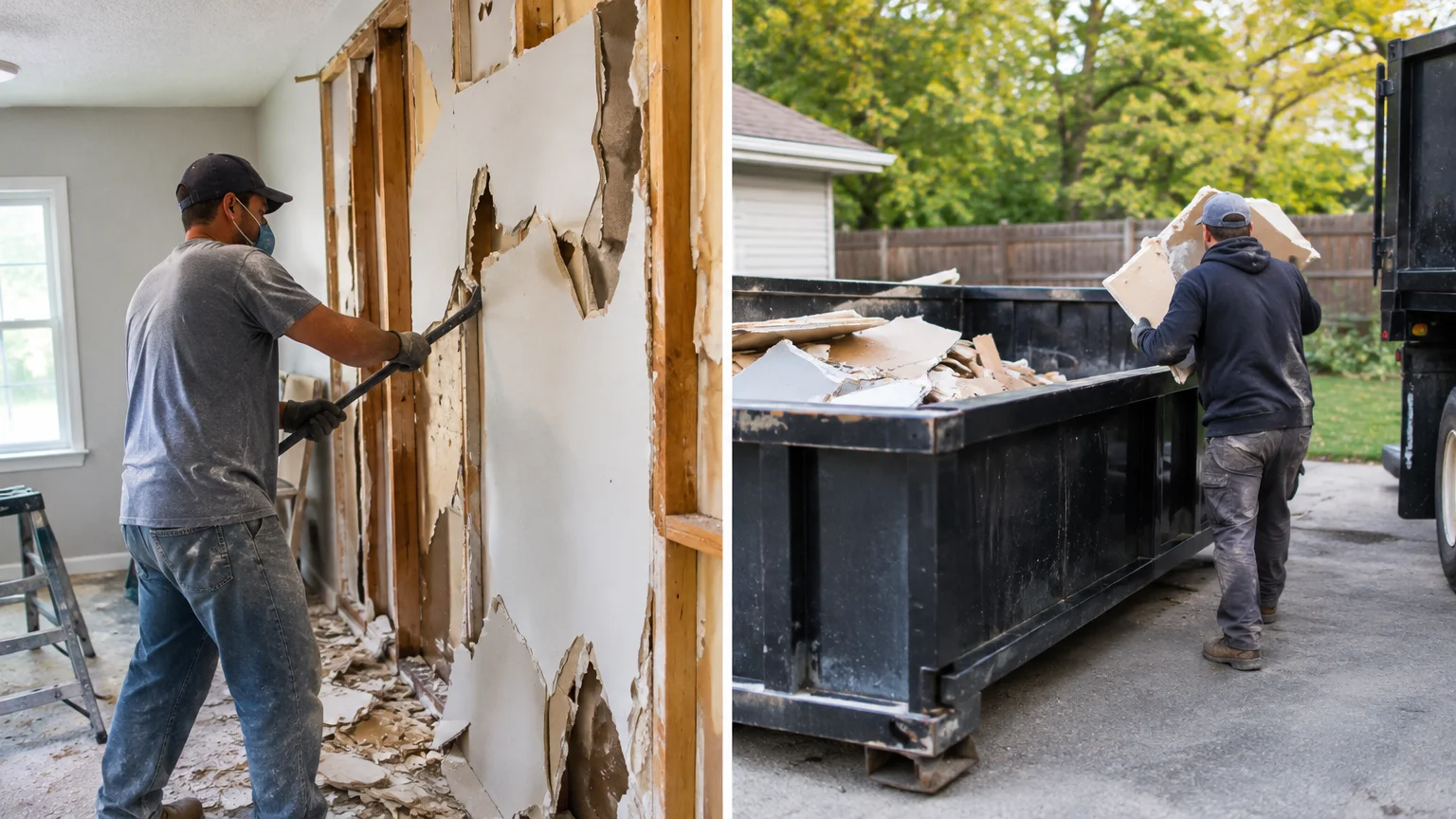
Drywall removal vs dumpster rental depends on the project, debris amount, schedule, and space available. Professional removal handles the lifting and loading for you. A dumpster may work better when a crew can load waste over several days. The right choice keeps renovation cleanup safe, simple, and on schedule.
Is drywall removal or dumpster rental better for renovation cleanup?
Professional drywall removal often suits smaller projects, tight spaces, and fast cleanup. A dumpster can help with larger renovations that create debris over several days. The best choice depends on who will load the waste and how soon the space must be clear.
How each option handles drywall, plaster, and mixed construction debris
Drywall is made from gypsum panels with paper facing. During a remodel, it may come down with nails, screws, insulation, trim, wood, plaster, or other waste. Mixed construction debris means two or more types of building material placed together for removal.
A hauling crew can remove loose drywall, broken plaster, wood scraps, and many other job site materials in one visit. This helps contractors and property owners avoid sorting every piece first. The crew can clear rooms, hallways, garages, and outdoor work areas after tear-out work ends.
A dumpster gives the renovation team a place to put debris as work continues. It may fit a project when the crew wants to load waste each day. The team must still break down large pieces, carry the material, and keep the space around the container safe.
Not every material belongs in the same container. Paint, chemicals, asbestos materials, propane tanks, and some appliances may need special handling. Ask the provider what it accepts before work begins.
What to consider about project size, timeline, and available space
A small bathroom update may not create enough debris to need a container on the property. A whole-home renovation may create steady waste and need a larger plan. The number of rooms, material types, and work speed all matter.
Timing can also change the answer. A dumpster can stay on-site during an approved rental period. A removal crew clears the material during a planned visit. If the property must be ready for tenants, buyers, or the next trade, direct hauling may help prevent delays.
Space is another key concern. A dumpster needs a safe placement area with room for delivery and pickup. Narrow driveways, shared parking areas, soft ground, and overhead branches can cause problems. Brentwood CA Junk Removal can help Brentwood property owners review the cleanup plan and select a practical service.
How much does drywall removal cost compared with a dumpster?
There is no single answer because each project has different labor, access, and disposal needs. Dumpster rental often depends on container size, rental length, delivery, pickup, and disposal rules. Professional removal often depends on debris type, labor needs, access, and the number of loads.
What affects the price of junk removal and dumpster rental
The first cost factor is volume. A few sheets of drywall need less hauling than debris from a full demolition. Dense materials such as concrete, brick, and tile can also change handling and disposal needs.
Labor is another major factor. With a dumpster, the property owner or crew usually handles lifting and loading. With professional junk removal, the hauling team handles the heavy work. This can help when workers need to stay focused on skilled renovation tasks or when the property owner cannot safely lift debris.
Access can change the work as well. Long carries, stairs, narrow halls, elevators, and limited parking may require more time. The provider may need details about the material before confirming the job.
The schedule matters too. A container left on-site may involve a rental period. A hauling appointment focuses on removing material during a planned visit. Neither option has the same cost for every project, so a clear description helps the provider explain the actual charge before work begins.
Which service offers more predictable project costs?
A dumpster may make planning easier when the project has a known debris stream and a crew can load the container. Extra time, added containers, overfilled loads, or restricted materials may still change the final amount.
A removal service may be easier to plan when the debris is already separated and ready for pickup. The team can review the load, access, and labor needs before the appointment. This can reduce problems caused by poor placement or a lack of loading help.
Property owners should compare the full project effort, not just the container or pickup charge. Full effort includes worker time, lifting, moving debris, cleanup, driveway use, and schedule risk. A lower service charge may not be the lower project cost when skilled workers lose hours carrying waste.
For a local plan, Brentwood CA Junk Removal can review the material list and access details with the customer. This planning can also help contractors working across the main Brentwood area, including Downtown Brentwood, Deer Ridge, Oakley, Antioch, Discovery Bay, Byron, and nearby job sites.
What are the differences in convenience, loading, and scheduling?
The biggest difference is who does the physical work. A dumpster provides the container, while a removal crew provides the container and labor. This can affect safety, work speed, and how clean the property looks after renovation work.
Who handles the lifting, loading, and job site cleanup?
With a dumpster, the renovation crew must carry drywall from the work area to the container. Pieces may need to be cut down, stacked, and loaded by hand. The crew also needs to keep the container below its fill line and stop loose debris from falling out.
With professional hauling, the removal team handles the lifting and loading. The crew can gather debris from rooms, garages, driveways, and other agreed areas. This may free contractors to focus on the remodel instead of moving waste.
Good job site cleanup includes more than removing large panels. Small screws, paper scraps, broken plaster, and loose dust can remain after tear-out work. A careful final pass helps leave the area ready for the next stage.
Safety should guide the decision. Drywall edges can be sharp, and old walls may contain nails, wiring, pipes, or hidden damage. Workers should use proper tools and protective gear. Suspected asbestos or other harmful material needs a qualified inspection and special handling before removal.
How driveway access, permits, and rental periods affect your choice
A dumpster needs a suitable placement area. The delivery truck must reach that area without hitting buildings, trees, wires, or parked vehicles. Some properties also have rules for containers placed on streets, sidewalks, or shared lots.
A property owner should check local requirements before ordering a container. Permit rules can vary by city and placement location. A hauling appointment may avoid the need for a long-term container, but the provider still needs safe access for its truck.
Rental periods can affect projects that run late. Weather, inspection delays, material delivery problems, or crew changes may extend the work. A container may remain available during the rental term, while a removal crew may need another scheduled visit.
The best plan matches the work schedule. For a short tear-out with debris ready now, direct hauling may be more convenient. For a long renovation with daily waste, a dumpster may offer a steady place to load material.
How do you choose the right drywall cleanup option for your project?
The right choice starts with four questions: how much debris exists, who will load it, how soon the area must be clear, and where the waste can go. A simple plan can prevent delays, unsafe lifting, and blocked driveways.
When professional drywall removal makes the most sense
Professional removal often makes sense when the property owner needs fast cleanup or lacks enough labor. It can also help when the job has stairs, long carries, limited parking, or several debris types. Contractors may prefer this option when their crew needs to stay focused on skilled work.
It may help after a kitchen remodel, bathroom tear-out, office update, rental turnover, or commercial build-out. A removal crew can also help when debris has collected in several parts of the property.
A dumpster may make more sense when the crew is already on-site each day and has room to load it safely. It can suit a larger project with a steady flow of waste and a clear rental timeline. The team should still confirm accepted materials and fill limits before delivery.
Brentwood remodelers and property owners should also consider the final cleanup date. A clean, open work area helps the next trade begin without waiting for debris removal. Brentwood CA Junk Removal supports local planning for drywall, plaster, wood, and other renovation debris.
Questions to ask before booking construction debris removal
Before selecting a service, the project manager should ask a few practical questions:
- Does the provider accept drywall, plaster, wood, and mixed construction debris?
- Who handles lifting, loading, sweeping, and final site cleanup?
- Can the truck reach the work area without blocking neighbors or traffic?
- What materials need separate handling or cannot be accepted?
- When will the debris be removed, and what happens if the project changes?
- What details does the provider need to confirm the job?
Clear answers help the customer compare services fairly. Photos, a material list, the number of rooms, and access details can make planning easier. Explain whether the debris is loose, bagged, stacked, or spread across several areas.
Key takeaways
- Professional removal includes labor, while a dumpster mainly provides a place to load waste.
- Project size, timing, debris type, and access should guide the decision.
- A dumpster may suit long projects with steady debris and safe loading space.
- Direct hauling may suit fast cleanups, tight properties, and limited labor.
- Customers should confirm accepted materials before drywall or plaster removal.
Conclusion
Drywall removal vs dumpster rental is not one-size-fits-all. A dumpster can support a longer renovation when a crew can load it safely. Professional hauling can save time when the debris is ready and the property needs a fast, hands-off cleanup.
The best choice considers the full job, including labor, access, scheduling, material rules, and final cleanup. Contact us today to plan drywall removal in Brentwood and arrange the right construction debris removal service.
Frequently Asked Questions
Is drywall allowed in a dumpster?
Drywall is often accepted, but rules can differ by provider and location. Some services may require drywall to stay separate from other debris. Confirm accepted materials before delivery. Paint, chemicals, asbestos materials, and other harmful items may need different handling.
Is it better to remove drywall before renting a dumpster?
The best timing depends on the renovation plan. A dumpster can arrive before tear-out work if the crew has room to load it. For debris already piled up, direct hauling may be easier. Match the service to the work schedule and available labor.
Can a junk removal crew take plaster and mixed renovation debris?
Many junk removal crews handle common renovation materials such as drywall, plaster, wood, and some concrete. Acceptance rules vary, especially for harmful or contaminated materials. Describe every material before booking. Photos can help the provider plan the right truck and crew.
How can a property owner prepare for drywall removal?
The property owner should clear a path, protect items that will remain, and separate materials that need special handling. Share parking limits, stairs, gates, and other access details. Keeping children and pets away from the work area helps the crew work safely.
Brentwood CA Junk Removal can help property owners and contractors think through the debris, access, and timing before choosing a cleanup plan.
If you are not sure what you are dealing with, it is worth having someone look at it before it turns into a bigger job. Get in touch with Brentwood CA Junk Removal today and we will tell you where you stand.